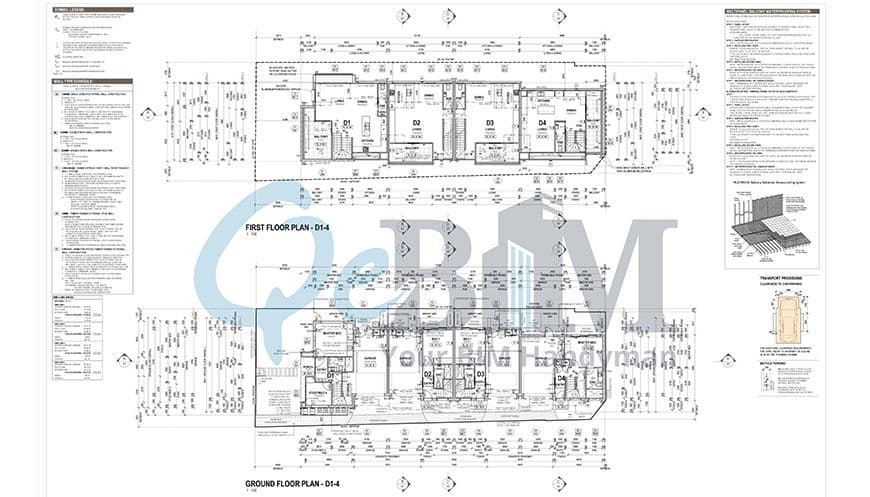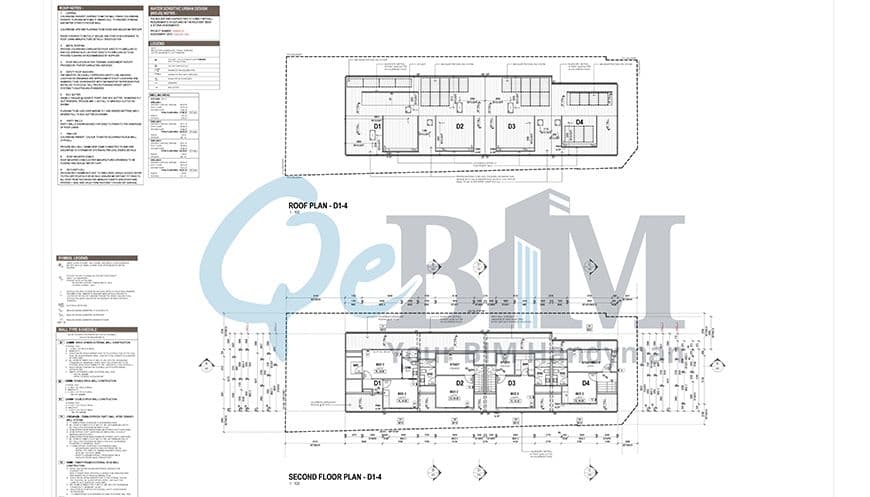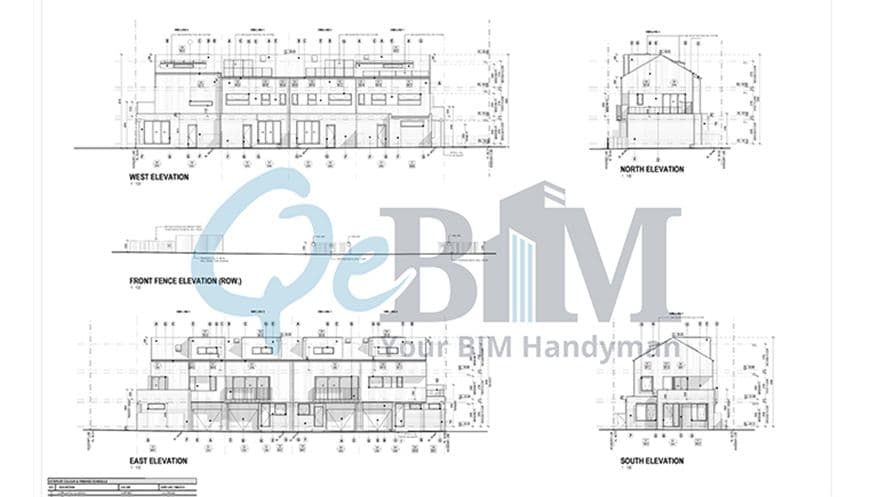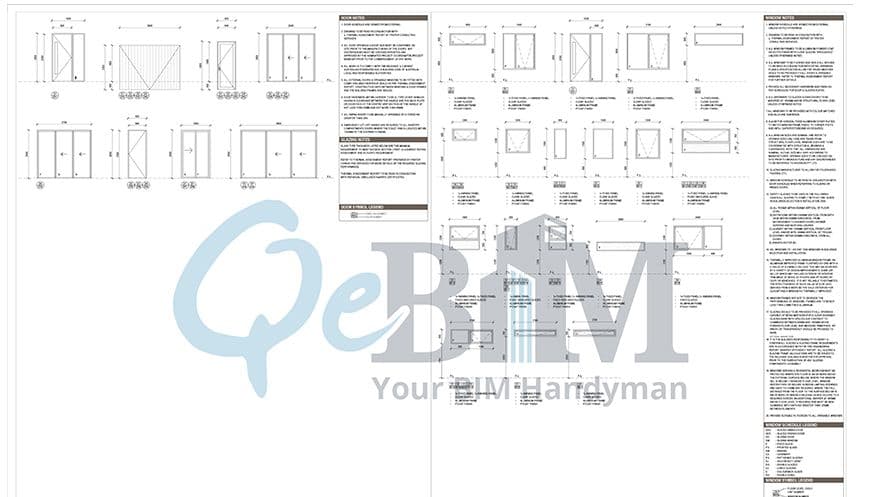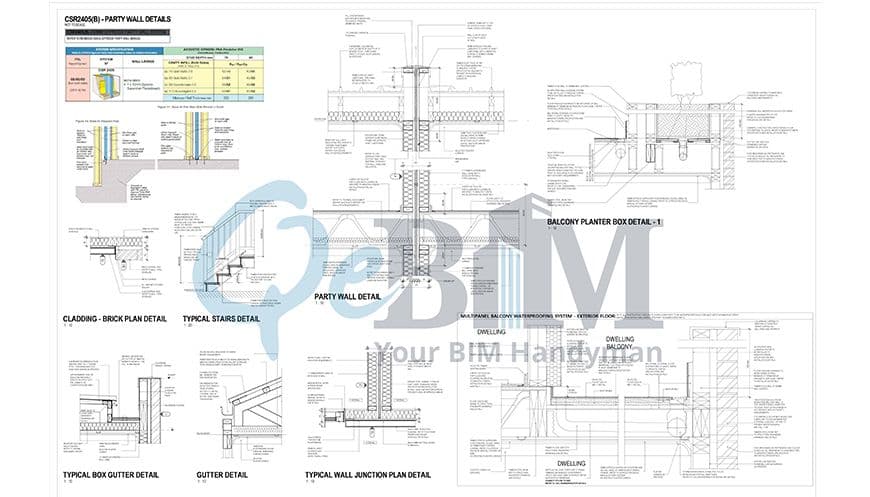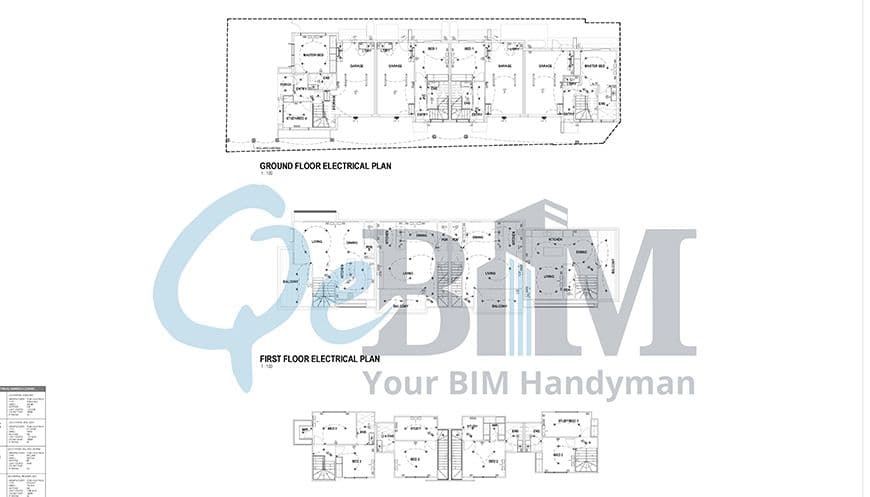
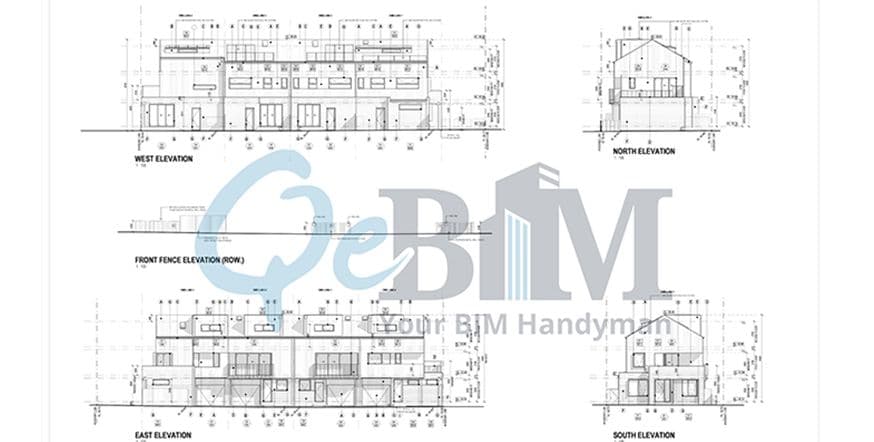
2D CAD files serving as the basis for model development and documentation.

Project Objective
To develop an accurate LOD 300 architectural BIM model and produce complete construction documentation for four residential units using the provided 2D CAD inputs.
Scope of Work
01
3D architectural modeling of four individual units
02
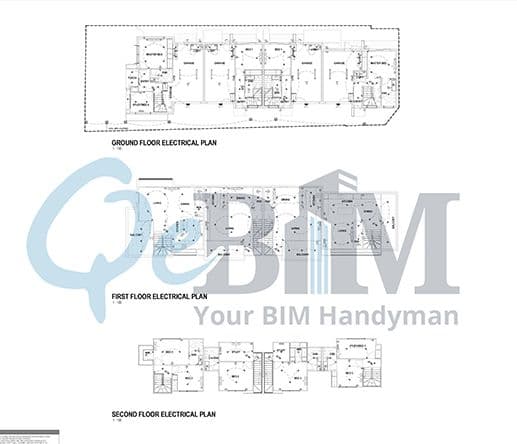
Preparation of floor plans, elevations, sections, enlarged details, and electrical layouts
03
BIM-based constructability review
04
Creation of coordinated CD sets for construction
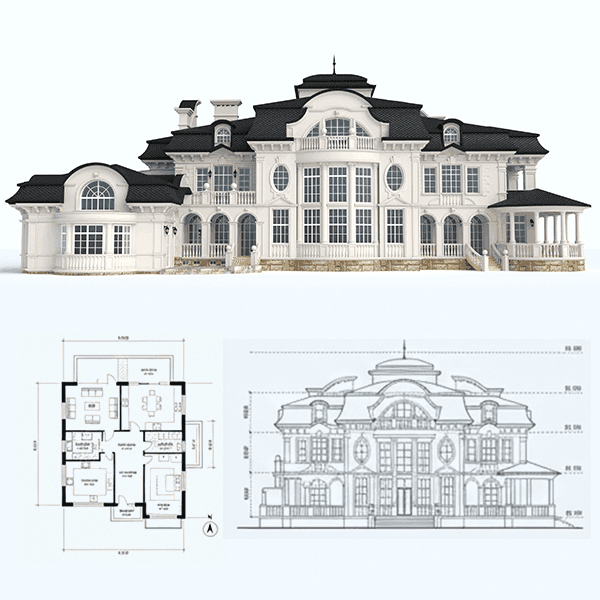
Client Input
Project Description
The project consisted of four uniquely designed residential units extending from the ground level to the second floor, with each unit featuring distinct spatial configurations and a shared garage positioned at the lower level. Developing the BIM model required precise interpretation of design variations across units as well as detailed coordination of architectural elements. The working drawings covered all essential components—from general plans to detailed layouts—ensuring clarity and readiness for construction.
Our Client’s Challenges
- Need for a highly detailed BIM model to visualize and validate constructability
- Requirement for accurate CD sets aligned with Australian residential standards
- Coordination of multiple unit layouts within a single structure
Our Approach and Solution
- We began by converting the 2D CAD inputs into a structured LOD 300 BIM model, ensuring that every architectural element was clearly represented and compliant with project requirements. Using BIM workflows, our team enhanced design clarity, improved coordination, and minimized potential construction conflicts. The final documentation set was produced directly from the BIM model, ensuring accuracy, consistency, and ease of use for the client during execution.
Output Delivered
- 3D Architectural BIM Model (LOD 300)
- Comprehensive CD Sets / Working Drawings