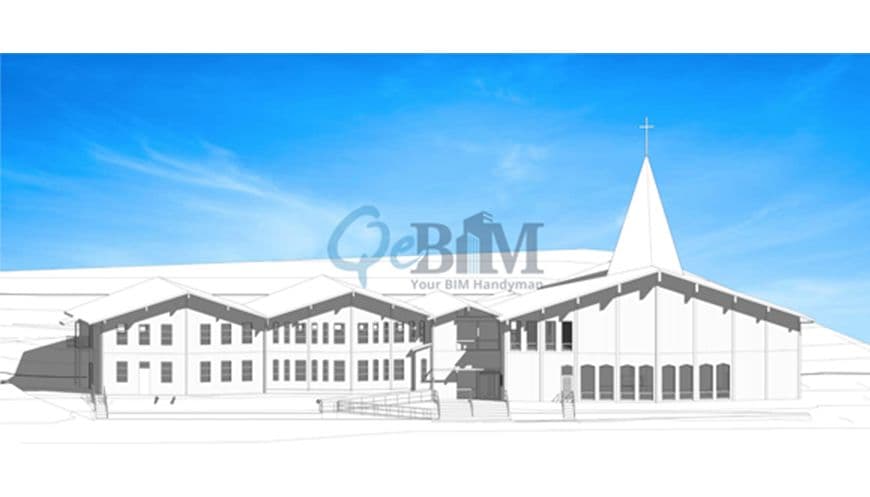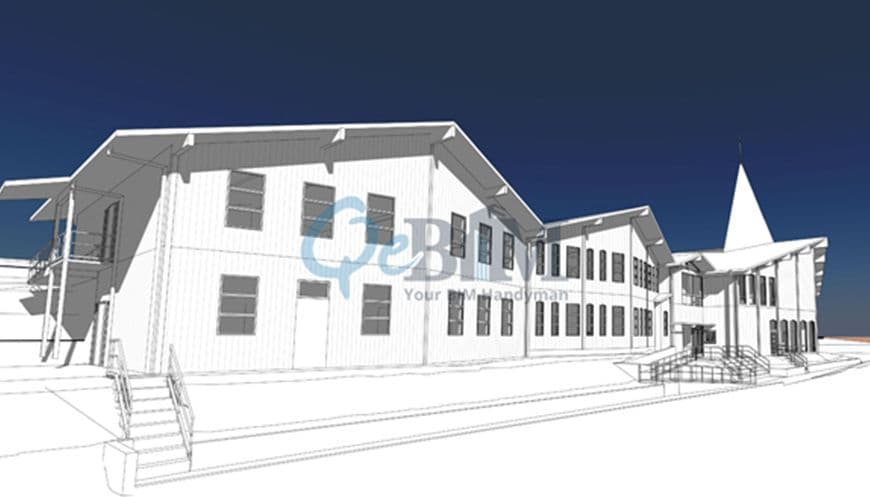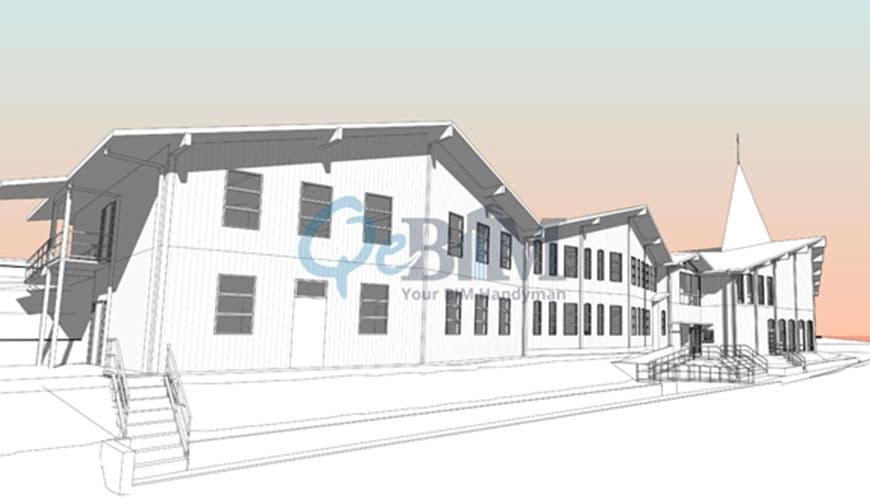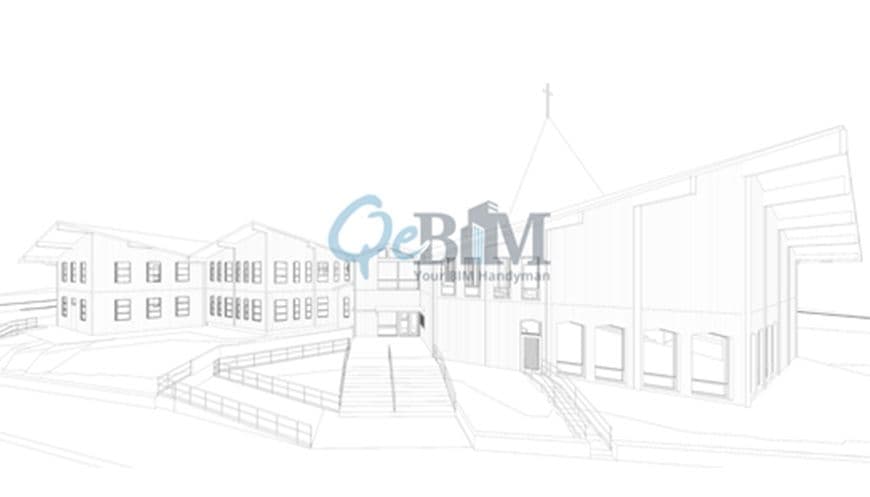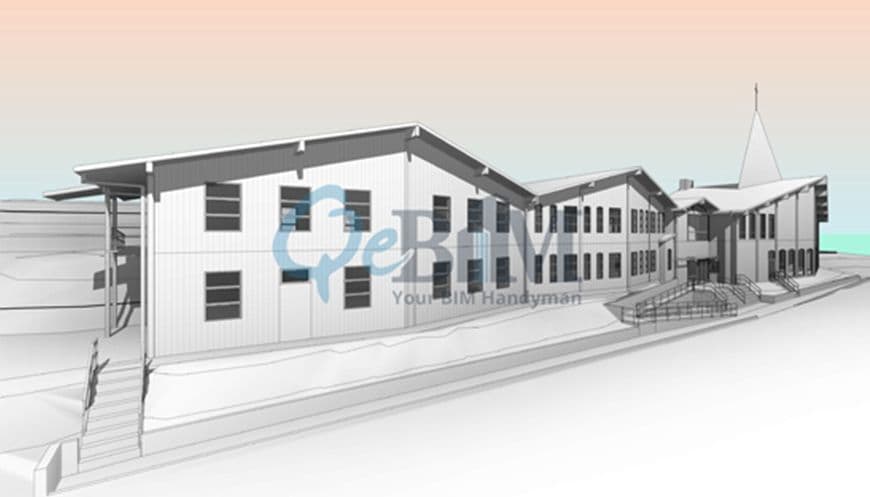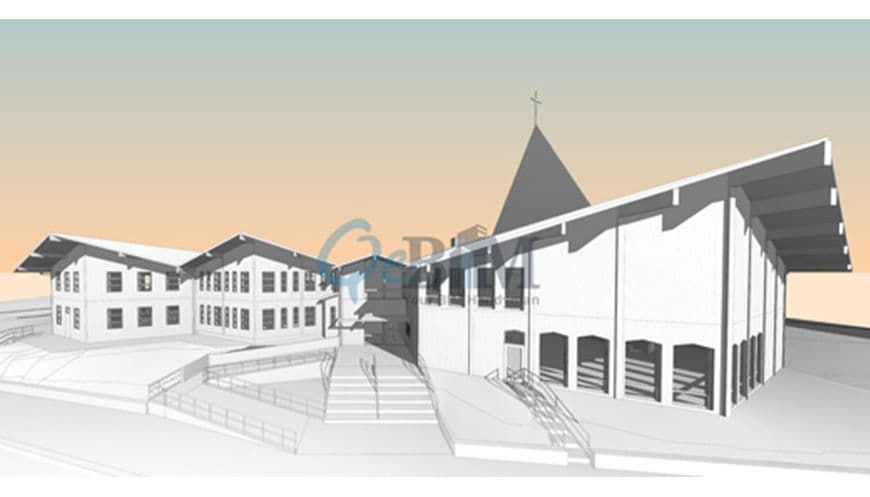
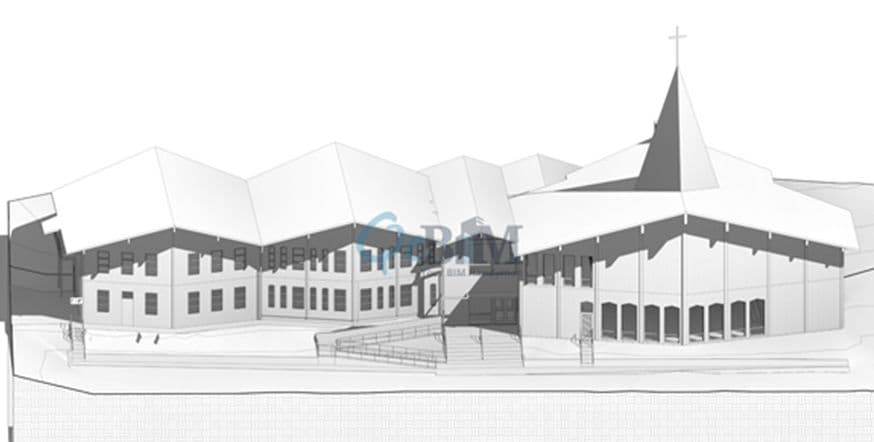
This formed the baseline for model verification, reconstruction and accuracy validation.

Project Objective
To document, map and digitally reconstruct the existing conditions of a historic church facility, enabling the client to plan the renovation and redevelopment activities with precision. The objective was to produce a technically accurate BIM model capturing the architectural character, structural components and aged elements to support heritage-sensitive upgrades.
Scope of Work
01
Development of a comprehensive BIM model reflecting the existing site conditions
02
Detailed mapping and recording of the architectural and structural features
03
Extraction of base drawings including the plans, elevations and reference sheets
04
Integration of legacy data (scanned drawings + on-site measurements) into a uniform digital environment
05
Preparation of documentation suitable for renovation planning and design coordination
Client Input
The client provided a diverse data set that included
- Scanned and dated architectural drawings
- Selective on-site measurement reports
- High-resolution site photographs capturing interior and exterior conditions
- PDF and CAD reference files
- Historical data and partial as-built references
Project Description
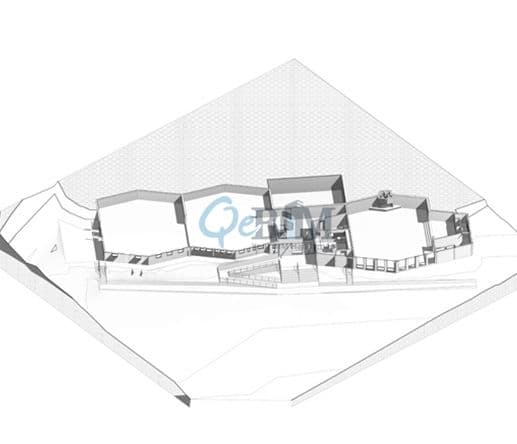
The project focused on revitalizing a culturally significant historic church characterised by the traditional wooden structural elements, intricate architectural detailing and several legacy extensions added over the time. Our role was to digitally recreate the building’s existing condition through a detailed BIM model that preserves its historic essence while supporting its modern redevelopment. Given the limited availability of accurate, updated site data, we created a project-specific modelling template for documenting physical conditions, structural behaviours and intricate design features. Each element—whether original or newly added—was carefully interpreted, cross-referenced and modelled.
This rigorous documentation ensured that the generated BIM environment could seamlessly guide the future design interventions while maintaining the structure’s timeless character.
Our Client’s Challenges
- Incomplete and outdated drawings
- Limited and fragmented site measurement data
- Need for high-accuracy documentation for a heritage building
- Requirement for a coordinated architectural and structural record model
- Ensuring that the existing condition is captured both visually and technically
Our Approach and Solution
- Conducted a thorough review of all the client-provided data and established a unified data interpretation workflow.
- Developed an LOD 300 BIM model that accurately reflected the geometry, materiality, spatial configurations and structural elements.
- Leveraged point-by-point cross-verification using photographs, vintage drawings and manual measurements to fill the data gaps.
- Applied heritage documentation standards to maintain the authenticity and structural fidelity.
- Created an integrated Architectural–Structural model to support downstream renovation design, planning and coordination.
Output Delivered
- Highly Detailed BIM Model of the existing historic church, built to LOD 300.
- Architectural Floor Plans, Elevations and Sections extracted from the BIM environment.
- Comprehensive Documentation Set capturing recorded details, mapped elements and reference drawings for redevelopment workflows.