

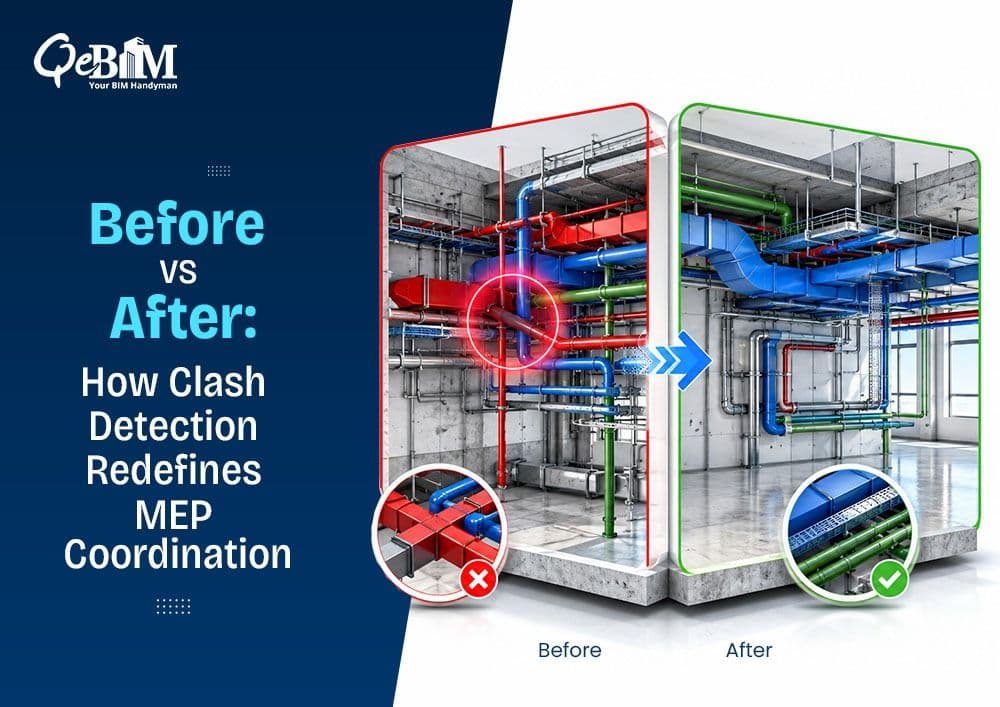
Before vs After: How Clash Detection Redefines MEP Coordination
Introduction
In complex building projects, Mechanical, Electrical, and Plumbing (MEP) systems often compete for the limited space within the tightly coordinated environments. Without a structured coordination process, design conflicts between these systems can lead to costly delays, reworks and on-site inefficiencies.
This is where Clash Detection Services integrated with the MEP BIM Modeling plays a transformative role. By identifying and resolving the conflicts digitally before the construction begins, the teams can shift from reactive problem-solving to proactive project execution thereby ensuring precision, efficiency and cost control.
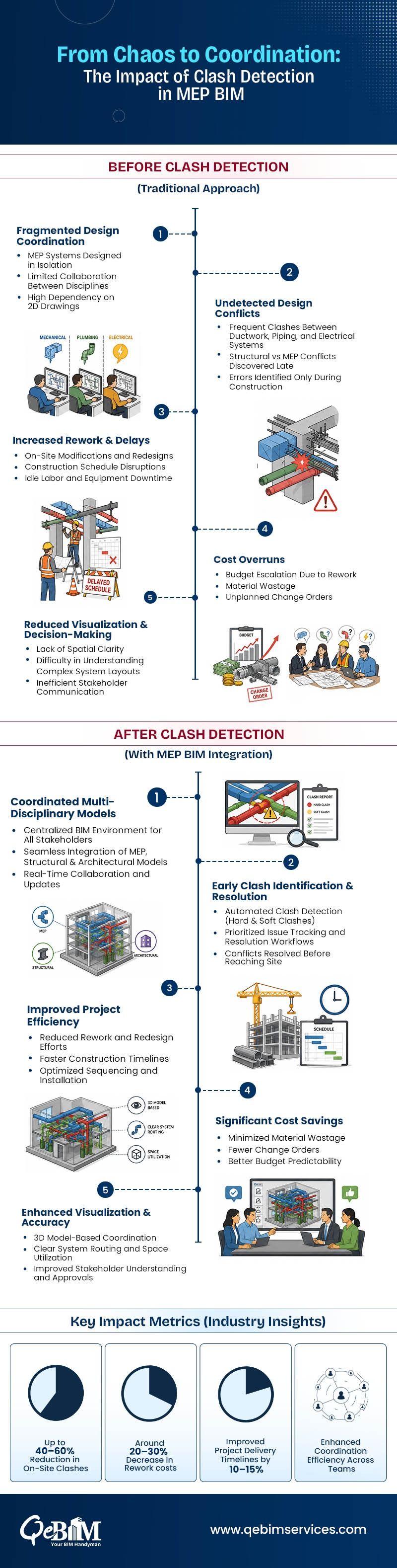
Conclusion
Clash detection in the MEP BIM is no longer a value-addition—it is a necessity for modern construction projects. By shifting the conflict resolution from the construction site to the digital model, the project teams gain greater control over the design accuracy, timelines and costs.
The transition from the traditional workflows to BIM-driven coordination empowers the stakeholders with clarity, collaboration and confidence. Ultimately, adopting the clash detection is not just about avoiding the errors—it’s about enabling the smarter, faster and more reliable project delivery.