

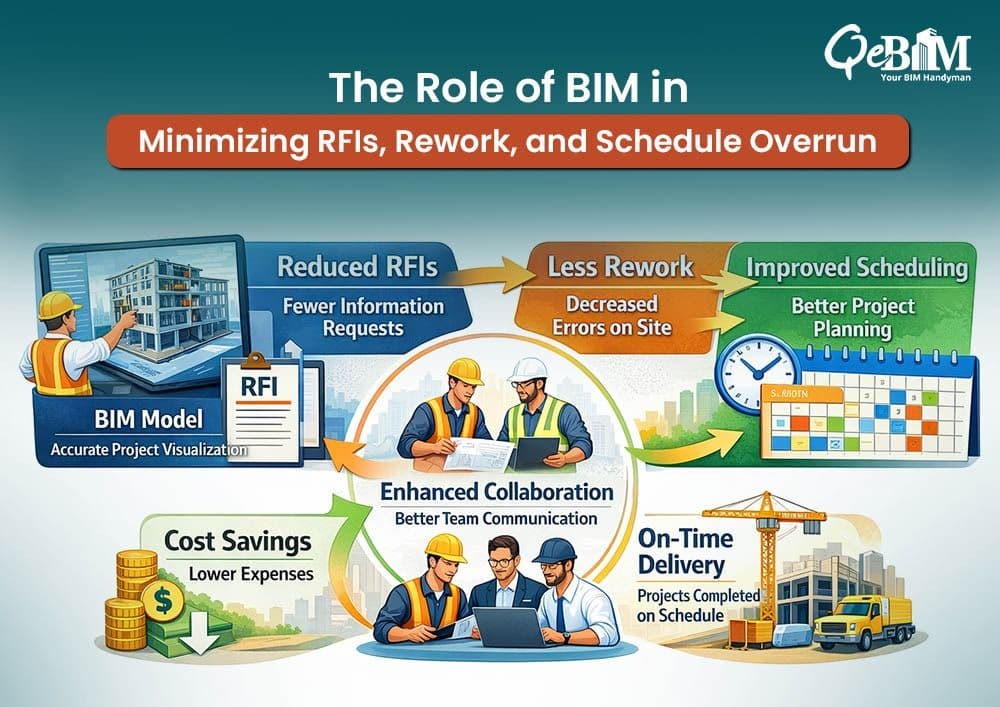
The Role of BIM in Minimizing RFIs, Rework, and Schedule Overruns
Introduction
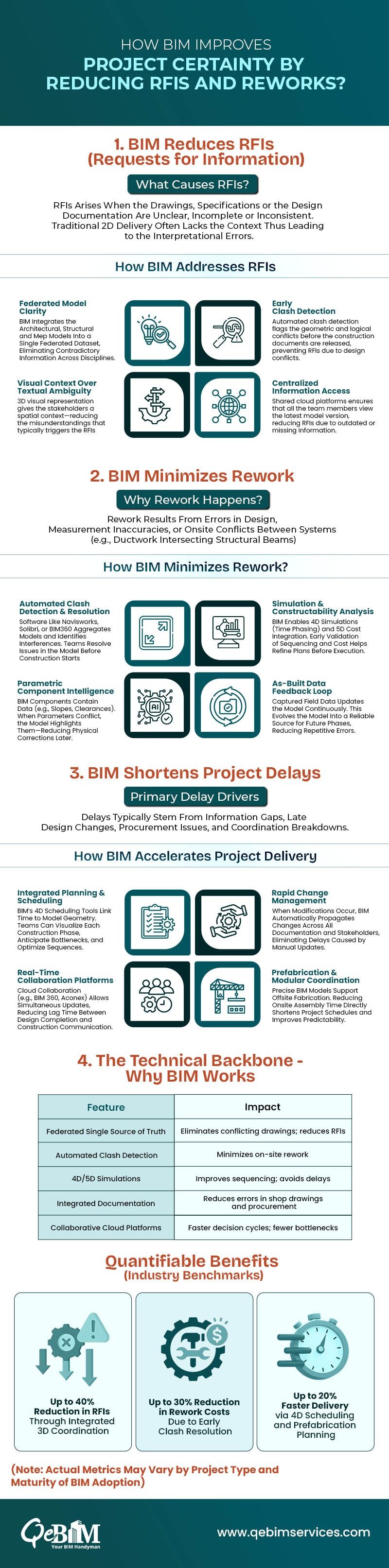
BIM has transformed the AEC industry by creating a shared digital representation of the physical as well as the functional project characteristics. BIM enables the multi-disciplinary collaboration, real-time clash detection and data-driven decision-making. Today’s industry demands speed, accuracy and accountability at the same time thus making BIM more than a digital tool; it is a project delivery methodology that significantly reduces the RFIs (Requests for Information), minimizes reworks and shortens the project delays. As a trusted BIM Services Provider, the firms can unlock the measurable improvements in project outcomes through intelligent model coordination, visual validation and automated documentation.
Conclusion
BIM drives better project outcomes through improved clarity, collaboration and lifecycle-wide control. By reducing RFIs, minimizing reworks and accelerating the delivery timelines, BIM drives the higher productivity and lower construction risk. For organizations embracing the digital transformation, partnering with an experienced BIM Services Provider delivers not only the competitive advantage but also measurable improvements in cost, quality and schedule performance. In today’s complex-built environment, BIM is not just a tool—it’s the backbone of smarter, more predictable and resilient project delivery